The Envelope That Sat Unopened on Our Kitchen Counter
The letter came on a Tuesday. Regular white envelope, government return address. My mother put it on the kitchen counter and looked at it the way you look at something that might go off.
Nineteen years she'd carried her green card. Nineteen years of tax returns, double shifts, parent-teacher conferences in a language she was still learning. And now everything came down to what that envelope said: an appointment. One officer. One interview.
She finally opened it that night. Then she looked up at me and asked the question I didn't have an answer to:
I did what everyone does. I googled it.
What I found out made it worse, not better
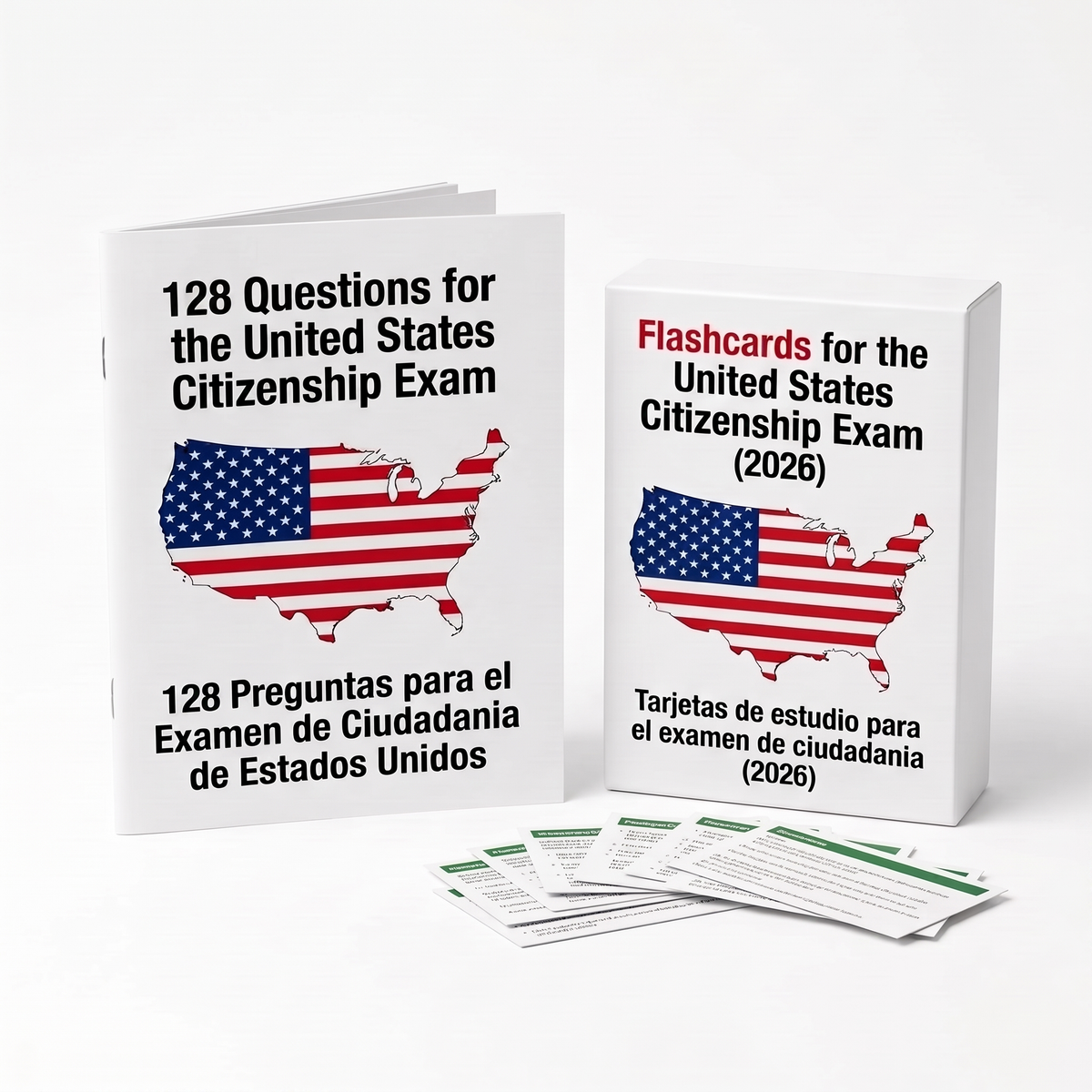
The 2025 civics test pulls from 128 official questions — the officer asks up to 20 of them, out loud, and you need 12 correct to pass. No multiple choice. No screen. A person across a desk, asking, waiting.
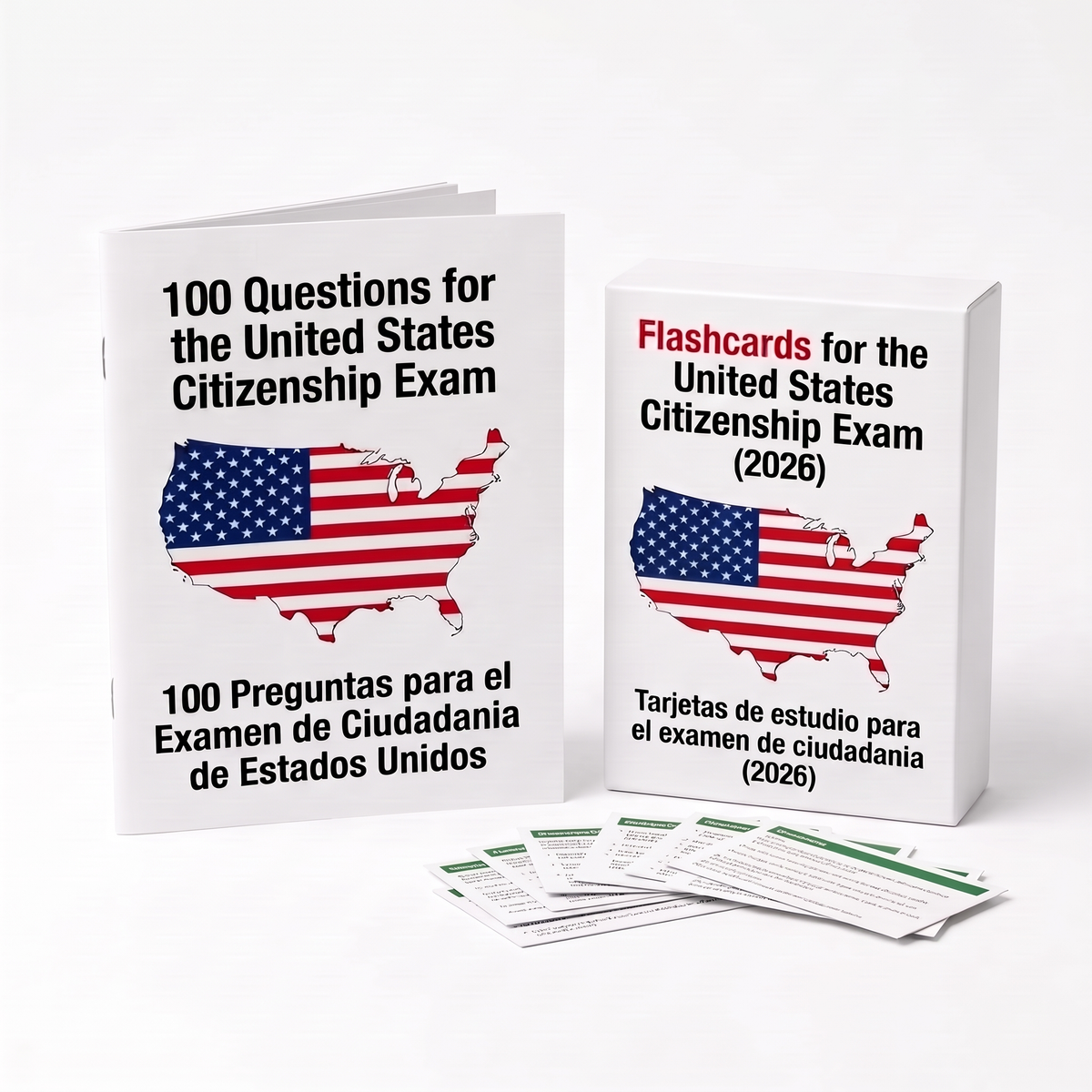
The 2008 civics test pulls from 100 official questions — the officer asks up to 10 of them, out loud, and you need 6 correct to pass. No multiple choice. No screen. A person across a desk, asking, waiting.
Which of the two tests you take is decided by the date you filed Form N-400, not the date of your interview. Filed on or after October 20, 2025, and you take the 2025 test: 128 questions, up to 20 asked, 12 correct to pass. Filed before that date, and you take the 2008 test: 100 questions, up to 10 asked, 6 correct to pass. Your appointment notice tells you which one applies to you.
And the civics questions aren't even the whole test. The English part starts the moment she walks in — the small talk in the hallway, "how are you today," "did you find parking" — that's already being graded. Then they go through her entire application again, question by question, and her spoken answers have to match what's on the form. Then reading a sentence. Then writing one.
Nobody tells you that. The free printouts are just lists of questions. In English only. No interview practice, no document list, nothing about what the room is actually like.
And here's the part nobody says out loud: this test is hard. In 2018 the Woodrow Wilson National Fellowship Foundation put questions from the citizenship test to a national sample of Americans — people born here, schooled here — as a multiple-choice quiz. Only about one in three scored a passing mark. Sixty percent could not say which countries the United States fought in World War II. So if you read down that list of questions and feel your stomach drop, that is not a verdict on you. It is the normal reaction to a genuinely hard test that most people born in this country have never had to sit.
We knew someone this happened to
A friend of our family — I'll call her Maria — went to her interview the year before. Smart woman. Worked two jobs. She studied the way most people study: reading the questions silently on her phone during breaks.
She froze. Not on the hard questions — on hearing them out loud, in an accent she didn't expect, with her heart pounding. She'd read the answers a hundred times. She'd never once said them.
She got her re-test notice, waited two months living with a knot in her chest, and passed the second time. She told my mother: "Don't study like me. Study out loud. Practice the interview, not just the questions."
That sentence became our whole plan.
The kitchen-table system that worked
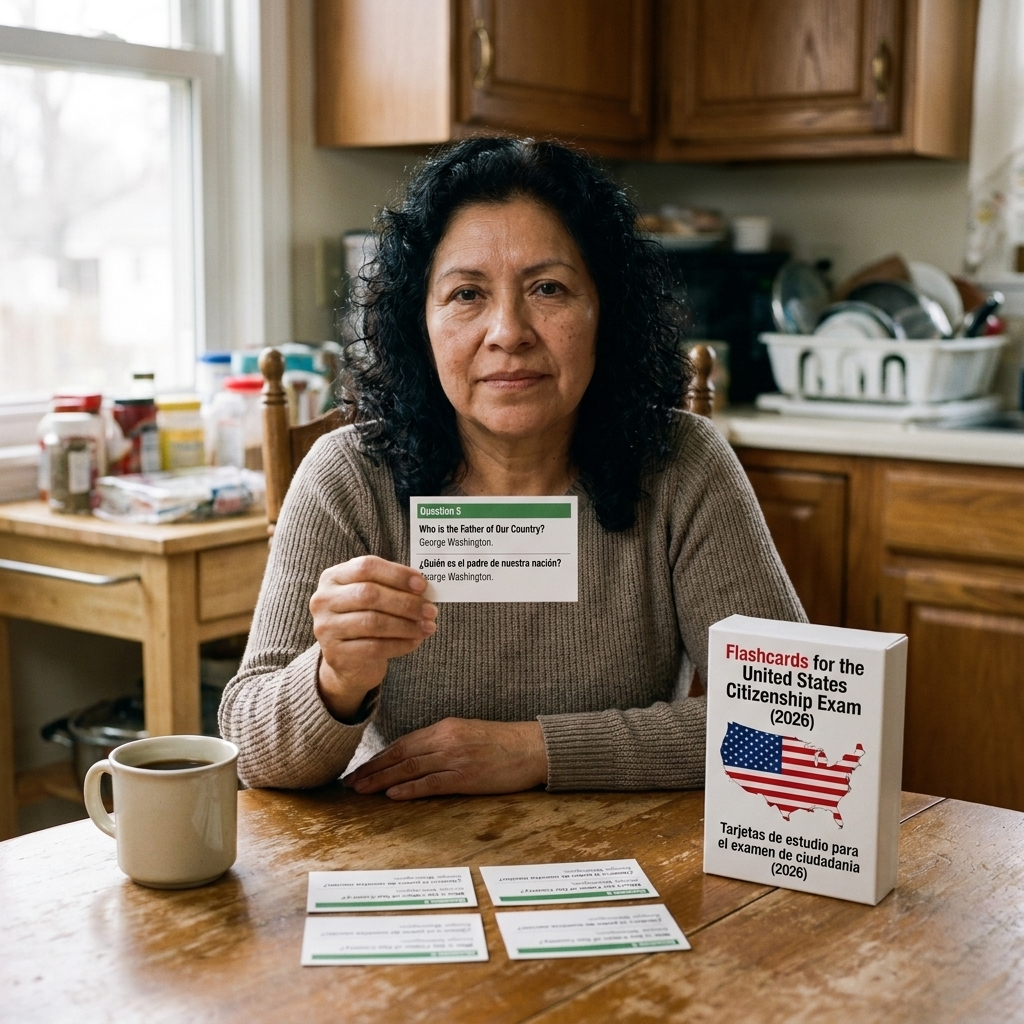
Every night after dinner, we ran it like the real thing. I played the officer. She sat across from me with her hands folded, because that's how she'd sit in the real room.
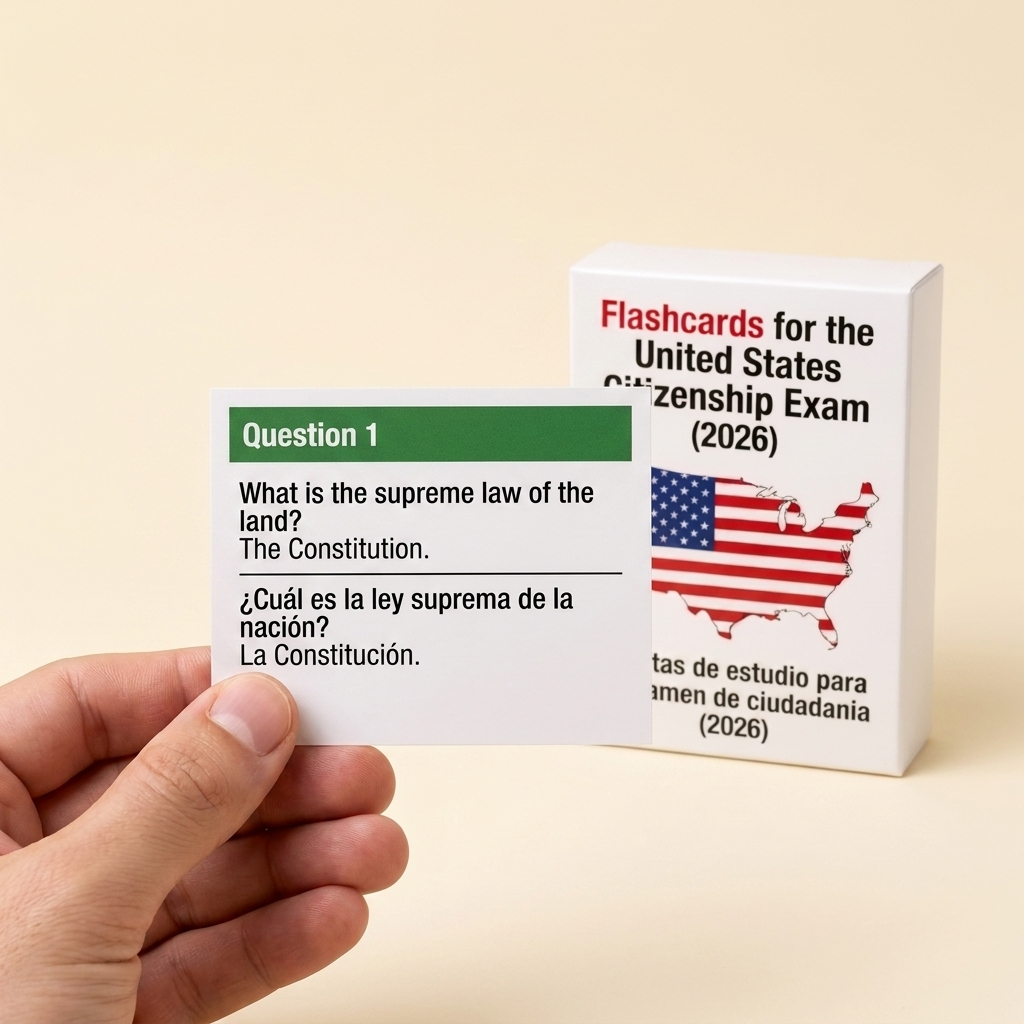
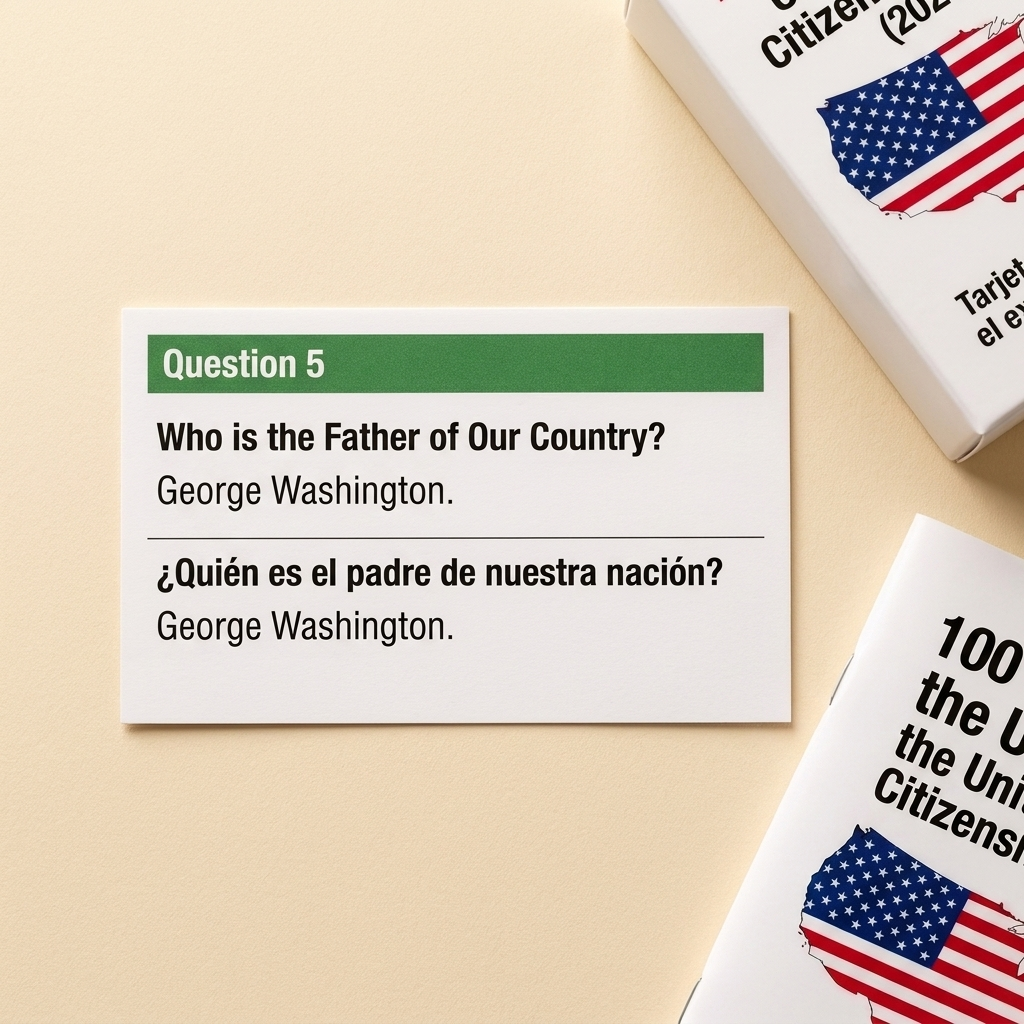
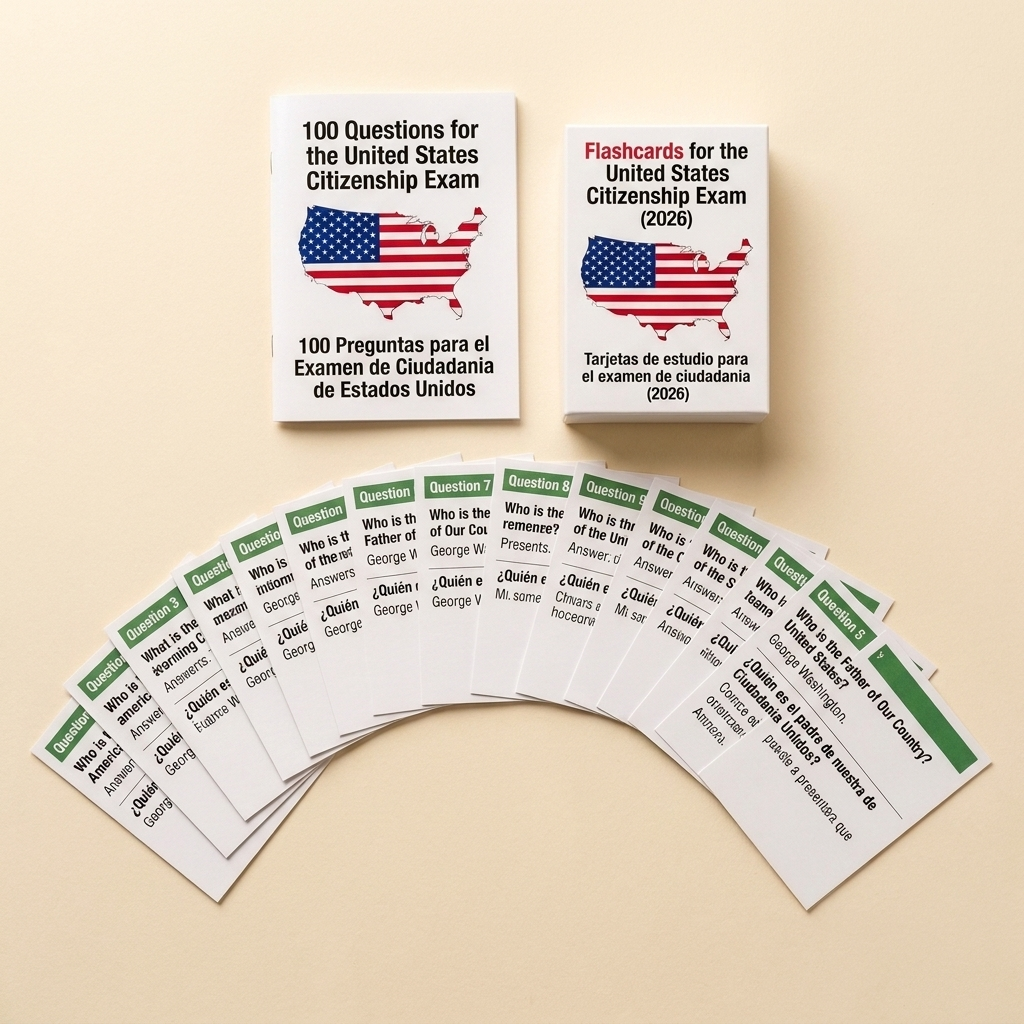
Twenty flashcards a night, out loud, in English — with the Spanish right there under each question so she always understood exactly what was being asked before she drilled the English answer. Every card she missed went into its own pile, and that pile got drilled until it was empty.
Twice a week we ran the whole interview start to finish: the small talk, the application questions, a reading sentence, a writing sentence, then a ten-question civics round, scored honestly. First mock: 4 of 10. Two weeks later: 8. The night before the interview: 10 of 10, twice in a row, and she went to bed early with her folder of documents already packed by a checklist.
Twice a week we ran the whole interview start to finish: the small talk, the application questions, a reading sentence, a writing sentence, then a twenty-question civics round, scored honestly. First mock: 8 of 20. Two weeks later: 16. The night before the interview: 20 of 20, twice in a row, and she went to bed early with her folder of documents already packed by a checklist.
The interview took twenty-two minutes. The officer stopped asking civics questions after six, because six correct is a pass and she hadn't missed one. When she came out she was crying, and holding the little flag they give you, and for about an hour she was taller than I've ever seen her.
The interview took twenty-two minutes. The officer stopped asking civics questions after twelve, because twelve correct is a pass and she hadn't missed one. When she came out she was crying, and holding the little flag they give you, and for about an hour she was taller than I've ever seen her.
Why we made this kit
After the ceremony, three different families asked us how she did it. So we turned the kitchen-table system into something you can hold:
- The full flashcard deck — all 100 official questions from the 2008 pool with every accepted answer, English and Spanish, shipped to your door. Physical cards, because saying answers out loud to a person is the drill that saved Maria's re-test. The complete 128-question 2025 set is included too, as a digital file, in case that's the one you take.
- The full flashcard deck — all 128 official questions from the 2025 pool with every accepted answer, English and Spanish, shipped to your door. Physical cards, because saying answers out loud to a person is the drill that saved Maria's re-test. The complete 100-question 2008 set is included too, as a digital file, in case that's the one you take.
- Instant digital access — the moment you order, everything is on your phone. If the interview is three weeks away, you don't wait for shipping to start.
- The Interview Simulator — the whole appointment stage by stage, with the 50 questions officers actually ask, so you can play the officer for someone you love the way I did.
- The document checklist and the night-before ritual — the folder, in order, nothing forgotten.
- The Red-Flag Sheet — the five situations (long trips, old arrests, tax issues) where the honest advice is "see an immigration attorney first." We'd rather lose a sale than let someone walk into that room with a fixable problem.
- The official reading and writing word lists — with practice sentences, because those two parts catch people out.
One interview. One shot at this year. The study kit costs less than 5% of the filing fee it protects.
Founder story; personal details adapted for privacy. Independent study aid — not affiliated with USCIS, DHS, or any government agency. Not legal advice. Test facts current as of publication; always follow your official appointment notice.